
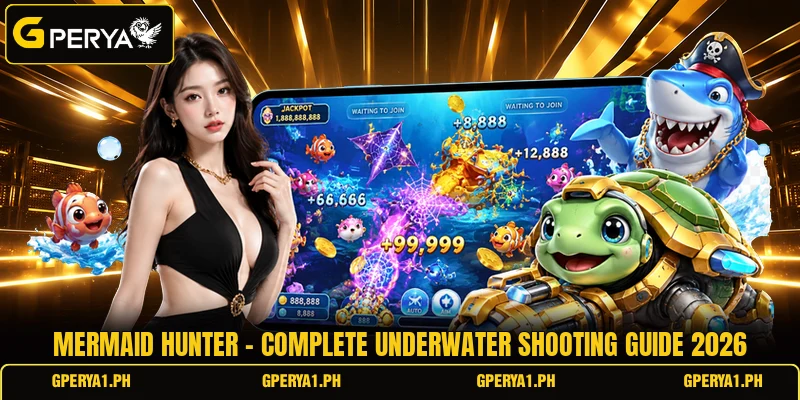
Mermaid Hunter places members in an underwater shooting setting where moving creatures cross the screen while each shot has a clear cost and possible return. At GPERYA, members can follow a screen that keeps targets, shot strength, and round results easy to read. This guide is written for members seeking clear rules, direct controls, and shooting methods that support better target decisions during each session.
Mermaid Hunter overview and core underwater gameplay
The main idea behind Mermaid Hunter is simple: members aim at moving sea creatures, select a suitable shot level, and fire before a target leaves the screen. Different creatures may require different amounts of fire, so random shooting can waste attempts when a target moves quickly through a crowded area. At GPERYA, the screen centers on visible targets, shooting controls, and changing action, making each round depend heavily on timing and aim.
Members should watch how targets enter, cross, and leave before using repeated shots, because movement direction often matters more than firing speed alone. A slower creature near the center gives more time for several hits, while a fast target near the edge may disappear before another shot connects. The basic structure of Mermaid Hunter rewards accurate selection, quick control changes, and attention to target position throughout the underwater round.

Rules and mechanics for accurate shooting rounds
The rules focus on choosing targets, setting shot power, and firing while creatures remain inside the active screen. Members should read each control before starting, because stronger shots may carry higher displayed costs in PHP or USD.
Understand Mermaid Hunter values values
Mermaid Hunter presents several moving targets at once, but their size, speed, and position can create different shooting situations. Members should avoid treating every creature alike, because one may stay near the center while another crosses the edge within a few moments. A clear target with open space is easier to track than one hidden behind moving objects.
Before firing repeatedly, members can observe whether a creature follows a straight path, turns slowly, or changes direction near the center. This reading helps reduce missed shots caused by aiming where the target was instead of where it is moving next. When creatures overlap, waiting for separation can provide a cleaner line and make each selected shot easier to judge.
Select shot power with purpose
Shot strength changes how each attempt is valued, so members should connect power selection with the target rather than changing levels without a reason. If a room displays PHP 1, PHP 5, or equivalent USD choices, those amounts should be treated as different firing settings, not automatic upgrades. A higher setting does not remove the need to aim correctly or choose a target with enough screen time.
Members can begin with a lower displayed level when checking movement speed, then switch after a target path becomes easier to follow. This keeps control clear because each increase has a direct reason linked to the current creature. Constantly moving between power levels can make it harder to compare which shooting pattern worked during the round.
Fire along the movement path
Aiming directly at a fast creature can cause shots to arrive behind it, especially when the target is already crossing toward an outer edge. Members can place the crosshair slightly ahead of its movement path and adjust as the creature turns or slows. This method works best when the screen is not crowded and the target direction remains easy to read.
View more: Mermaid Treasure – Complete Ocean Game Guide For Members
Repeated firing should follow a visible target rather than continue after it becomes blocked by another creature or moves outside a useful angle. When the line becomes unclear, pausing briefly can prevent shots from following a target that is already leaving. Good timing in Mermaid Hunter comes from matching aim position with movement instead of depending only on faster tapping.
Target tactics and chamber choices that matter
Better rounds depend on reading target patterns, choosing a suitable room, and recognizing when the screen offers a clean shooting chance. Members can improve decisions by comparing creature position, travel time, and shot level before committing attempts.
Focus on solitary moving creatures
An isolated creature gives a clearer path because fewer objects block the view or interrupt tracking across the screen. Members can follow its direction longer and decide whether another shot still makes sense before the target reaches the boundary. This is easier than chasing a large creature inside a dense group where several bodies overlap.
When Mermaid Hunter becomes crowded, members can shift attention toward smaller open lanes instead of firing into the busiest area. A target entering from one side may offer several seconds of clean movement before other creatures cross its path. Watching these openings creates a controlled sequence and reduces confusion from multiple moving shapes.
Compare room tempo before firing
Different rooms may feel faster or slower because target density, shot settings, and screen activity can change the pace of decisions. Members should spend the opening moments reading that pace instead of copying the same shooting rhythm in every room. A busy screen may require shorter tracking decisions, while a calmer screen can support more deliberate target selection.
In Mermaid Hunter, room choice should match the shooting level a member wants to use during that session. A room showing larger PHP or USD shot values may create a different cost per attempt than a lower setting. Checking those values before firing avoids accidental use of a level that does not match the intended round.
Watch major objectives before committing
Large or special creatures can attract attention immediately, but their position should still be checked before several shots are committed. Members should look for enough travel space, a clear line, and a movement path that remains visible for more than a brief moment. Entering late near the edge can make even a strong target a poor shooting choice.
A better moment in Mermaid Hunter appears when a major target enters with open space and remains visible across a wider part of the screen. Members can track direction, adjust the crosshair, and decide whether continued fire matches the target’s movement. This keeps the decision tied to current screen action rather than to the target’s size alone.
View more Category: Fish
Conclusion
Mermaid Hunter gives members a direct shooting format where target movement, shot strength, room pace, and screen position shape every decision during play. Members using GPERYA can keep each round clearer by reading the target path first, choosing a matching shot level, and firing only while the angle remains useful. Register, download the app or game when available, and enjoy each underwater session with good luck on every round.
